
 +44 (0)151 548 9000

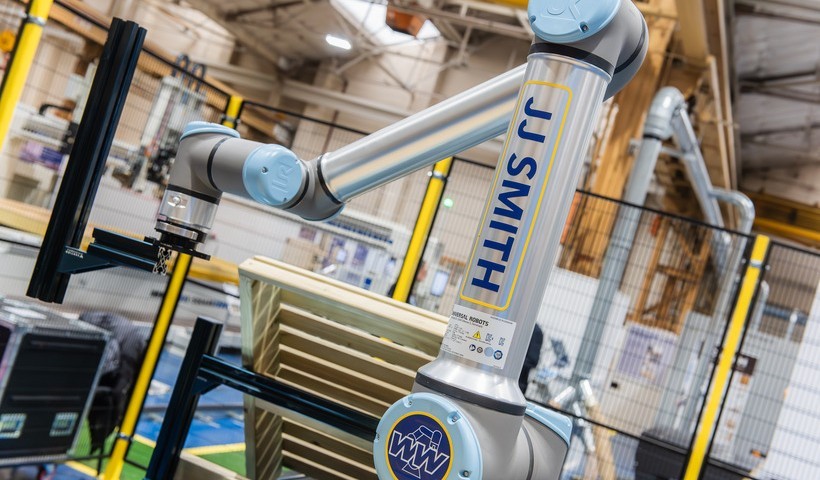


According to Head of Robotics, Mark Lee, speed is usually the first thing people ask for in a robotics project. But it is rarely the right place to start.
When speed dominates the opening conversation, it often signals that the real problem has not yet been clearly defined.
“Can the robot go faster?”
It is a fair question. Robots are capable of moving at incredible speeds with precision and repeatability far beyond human capability. But speed alone rarely delivers meaningful improvement.
The Misconception About Speed
Industrial robots can achieve exceptional cycle times when performing simple, repeatable tasks such as point-to-point movements.
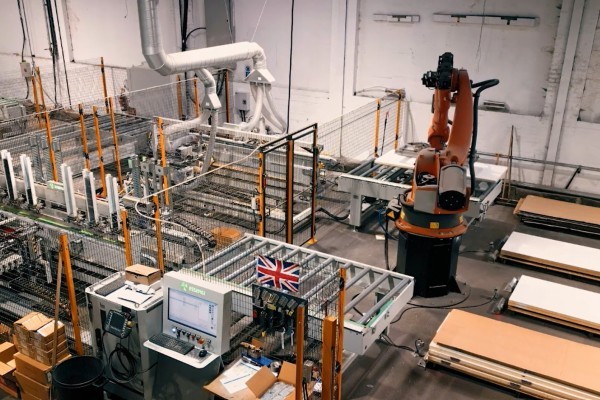
However, most real manufacturing environments, especially in woodworking, are far more complex. Systems often need to:
- Sense and detect parts
- Compensate for variation
- Adjust to inconsistent positioning
- Handle material differences
As soon as variability enters the process, cycle time slows. This is not a failure of the robot. It is a reflection of the task complexity.
Robots Are Not Humans
A common mistake in automation is trying to replicate human processes.
Humans are naturally adaptable. We adjust instinctively to variation, misalignment, and subtle differences in materials. Robots cannot do this unless specifically programmed and supported by the right system design.
A robot will do exactly what it is told, no more and no less.
This means automation is not about copying human actions. It is about rethinking and redesigning the process to suit robotic strengths.
Consistency Wins
The real advantage of robotics is consistency, not speed. A robot delivers:
- The same pace
- The same motion
- The same quality
Every cycle, every hour, every shift. There is no fatigue, no distraction, and no variation over time. This reliability compounds into meaningful productivity gains.
But even consistency has limits if the process itself is flawed.
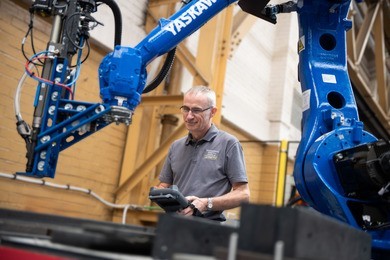
The Real Drivers of Performance
The greatest improvements in automation come from the process surrounding the robot.
To unlock real performance, three fundamentals matter most:
Safety first
A well-designed system reduces risk and creates a stable foundation for productivity.
Understanding variability
If inputs are inconsistent, either the robot must compensate or the upstream process must improve.
Simplification
Reducing complexity leads to faster, more reliable, and more scalable automation.
When these elements align, continuous flow emerges. And it is continuous flow, not raw speed, that drives output.
Designing for Automation
Automation performs best when it is considered from the beginning, not added later.
Forcing a robot into an existing human workflow often leads to inefficiency and frustration. A better approach is to step back and rethink the process entirely.
Ask a different question:
If a robot were doing this from the start, how would we design it?
Think Like a Robot
Successful woodworking automation is not about pushing machines to move faster. It is about creating processes that allow them to perform consistently and effectively.
When designed correctly, robots do more than execute tasks. They increase productivity.
So the next time the conversation starts with speed, pause and reconsider.
Are we thinking like a robot?